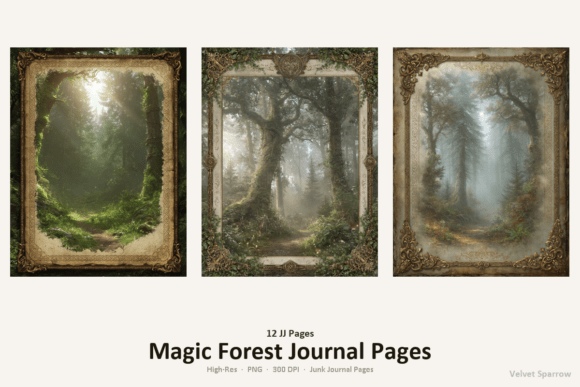
Enchanting Magic Forest Journal Pages for Creative Projects
The best design assets often come with a built-in sense of history. Magic Forest Journal Pages aren't just a set of printable papers; they are a collection of textures and atmospheres. For the crafter, designer, or content creator, these pages offer a tangible link to vintage aesthetics without the hassle of aging paper yourself. The appeal lies in the details: the subtle grain of the kraft, the faded ink of the illustrations, and the intentional imperfections that make digital assets feel handmade.
Visual Character and Versatility
At its core, this collection is defined by a vintage texture that holds up under scrutiny. The files are optimized for 300 DPI, ensuring that whether you are printing a full-page spread or cutting them down into small tags, the image quality remains sharp. This is a critical factor for print design where pixelation can ruin the illusion of authenticity.
The "Magic" in the title refers to the forest motifs—botanical sketches, woodland creatures, and aged maps—but the real magic is in the material simulation. The visual personality is distinctly earthy and organic. It avoids the sterile look of digital filters, offering instead a rich, tactile experience that mimics real vellum or aged cardstock. This versatility allows you to use the same PDF file for completely different projects. Print on transparent vellum for a layered, ethereal look in a traveler notebook, or use heavy cardstock to create durable junk journal covers.
Practical Applications for Designers and Crafters
Understanding where these pages fit into your workflow is key to maximizing their value. They are not just for personal scrapbooking; they serve as robust design assets for commercial and creative ventures alike.
- Scrapbooking and Junk Journals: The primary use case. The mix of page styles is designed to interact. You can layer a busy botanical print behind a simpler, aged text block to create depth without visual clutter. This is essential for visual hierarchy in journaling.
- Packaging and Branding: For small businesses selling handmade goods, these pages are a game-changer. Use them as gift wrapping, tissue paper inserts, or greeting card backgrounds. This adds a layer of perceived value and care to your packaging design, reinforcing a brand identity centered on craftsmanship and nature.
- Digital Content and Social Media: While they are print-ready, these files work beautifully as digital backgrounds. Use them in social media graphics to break up the monotony of solid color blocks. They provide an excellent canvas for quote graphics or product photography overlays, adding a "lifestyle" feel to your feed.
- Mixed Media and Canvas Work: Artists can print these on heavy stock to use as base layers for acrylics or collages. The vintage textures provide a complex starting point that interacts with paint in interesting ways, saving time on creating backgrounds from scratch.
Integrating Texture into Modern Typography
One of the challenges in modern typography is making digital text feel grounded. Using Magic Forest Journal Pages as a background requires careful consideration of type pairing. Because the backgrounds are busy and textured, you need a typeface that commands attention without fighting the background.
A bold sans serif font often works best for headlines, providing a clean, modern counterpoint to the vintage chaos of the forest textures. For body text, a highly legible serif font ensures readability against the grain. If you are designing a logo or brand identity using these assets, consider a script font for a hand-lettered feel, but ensure it is a premium font with clear letterforms so it doesn't get lost in the texture.
When testing your font pairing, print a sample. Readability considerations shift when you move from screen to paper. The warmth of the kraft paper or the translucency of the vellum will affect how the ink appears. High-contrast combinations (black text on lighter areas of the texture) usually yield the best results for editorial design and web design mockups.
Maximizing Your Download
This collection is part of a larger series—the Chronicles of the Old Kingdom. For those working on large-scale projects or needing a cohesive look across multiple volumes, exploring the full collection ensures consistency in style and quality.
Here is a practical checklist for getting started:
- Paper Selection: Don't default to standard printer paper. For smash books, try kraft paper. For formal inserts, use a smooth cardstock. The paper choice fundamentally changes the "personality" of the final product.
- Scale and Cropping: Don't be afraid to crop. These are full-color assets designed to be cut. A small section of a floral print might make the perfect pocket for a journal, or a corner of a map can become a unique envelope flap.
- Layering Techniques: Use the "Mix of page styles" to your advantage. Place a darker, moodier texture behind a lighter, text-heavy page to create a vignette effect.
Ultimately, Magic Forest Journal Pages provide a bridge between digital convenience and analog charm. They offer a quick way to inject personality into creative projects, whether you are a hobbyist documenting memories or a designer building a brand identity