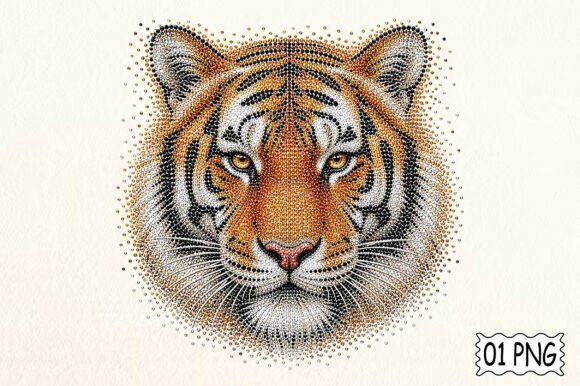
Faux Rhinestone Tiger Design: Bold Graphic Impact
The Anatomy of a Fierce Design Asset
In the world of graphic design, finding an asset that bridges the gap between raw animalistic power and polished luxury is rare. The Faux Rhinestone Tiger Design achieves exactly that. This is not just another stock illustration; it is a highly detailed, front-facing tiger portrait rendered with the specific intent of mimicking sparkling gemstones. When you look at this design, you aren't just seeing a predator; you are seeing a statement piece. The visual characteristics rely heavily on high-contrast shading to create the illusion of depth, making the "stones" pop off the screen. The intensity of the tiger’s eyes serves as the anchor point, drawing the viewer in, while the surrounding crystal textures provide a glamorous, high-fashion finish.
The style of this artwork sits comfortably at the intersection of streetwear aesthetics and couture branding. It avoids the flat, cartoonish look of standard clip art, opting instead for a realistic color palette infused with a luxury shine. The overall appeal lies in its versatility. It possesses a personality that is both aggressive and elegant—traits that are highly sought after in modern typography and visual branding. For a designer looking to inject some "bling" into a project without resorting to tacky gradients, the Faux Rhinestone Tiger Design offers a sophisticated solution. It functions much like a premium display font: it commands attention immediately and sets a very specific tone for the rest of the composition.
Strategic Applications for Maximum Brand Identity
Understanding where to deploy the Faux Rhinestone Tiger Design is key to maximizing its return on investment. Because it is a high-resolution PNG with a transparent background, it fits seamlessly into a variety of workflows. However, its strongest performance is seen in specific niches. For small business owners in the apparel industry, this design is a game-changer for sublimation printing. Imagine a black hoodie or a heavy cotton tee where the tiger is placed centrally on the chest. The "faux rhinestone" effect translates beautifully onto fabric, giving the garment a textured, premium feel that customers are willing to pay more for.
Beyond clothing, consider the impact on packaging design. If you are launching a product line that needs to convey strength—perhaps a grooming brand, an energy drink, or a high-end streetwear label—incorporating this tiger into your label design creates an immediate brand identity. It works exceptionally well when paired with clean, sans serif fonts. The complexity of the tiger illustration balances out the simplicity of a geometric sans serif, creating a professional visual hierarchy. It is also an excellent choice for social media graphics. In a crowded feed, a sparkling, fierce tiger face stops the scroll. It provides the "thumb-stopping" visual power that influencers and marketers constantly seek.
Integrating the Tiger into Your Creative Workflow
Practical guidance is essential when working with such a distinct design element. The first step in evaluating project fit is analyzing the "visual weight" of the Faux Rhinestone Tiger Design. Because it is dense with detail and texture, it requires breathing room. Avoid cluttering the background with busy patterns; let the tiger be the star. If you are using this for a poster or editorial design, treat it like a hero image. Place it against a solid, dark background—deep navy, black, or charcoal—to make the crystal textures shine. If the background is too light, you risk losing the definition of the gemstone effects.
When considering font pairings, think about contrast. The tiger is ornate and decorative, much like a heavy script font or a blackletter typeface. However, using two decorative elements together can be chaotic. Instead, pair the Faux Rhinestone Tiger Design with a modern, minimal typeface. A clean sans serif or a structured serif font works best for any accompanying text, such as a brand name or a tagline. This ensures that the text remains readable while the graphic provides the artistic flair.
Furthermore, always check the licensing. Since this is a digital download intended for commercial use, you have the freedom to use it across multiple projects, from digital stickers to large-format prints. However, reviewing the specific file details ensures you are using the asset correctly. The transparency of the PNG file is crucial here; it allows you to layer the tiger over other design assets without needing to manually cut out the background, saving you valuable production time.
Visual Hierarchy and Audience Engagement
The psychological impact of the Faux Rhinestone Tiger Design on an audience cannot be overstated. In marketing and branding, imagery dictates emotion. A tiger represents courage, strength, and independence. By adding the "faux rhinestone" element, you layer these traits with a sense of luxury, exclusivity, and status. This combination influences brand perception significantly. It tells your audience that your brand is bold, confident, and not afraid to stand out. It moves a brand away from "generic" and into the realm of "lifestyle."
For content creators and bloggers, using this design can elevate the perceived value of your content. A newsletter header featuring this tiger, or a YouTube thumbnail utilizing its intense gaze, suggests high-quality content inside. It creates a cohesive visual identity that helps with recognition. When your audience sees that distinct sparkle and fierce expression repeatedly, they begin to associate it with your specific brand voice. This is the essence of building a strong brand identity—consistency in quality and style. The Faux Rhinestone Tiger Design is more than just a picture of a cat; it is a tool for visual storytelling that conveys power and prestige in a single glance.